

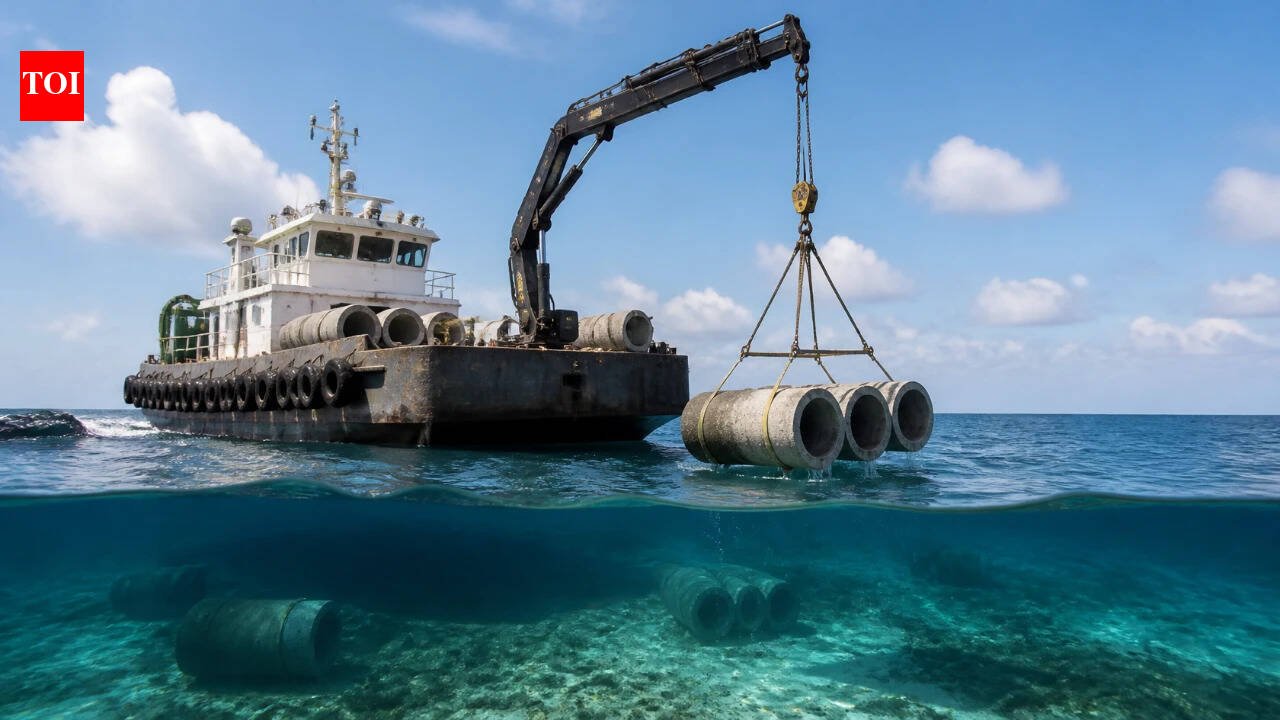
Reefs were under threat in the ocean, so humans found a new solution by dumping construction waste onto the ocean floor. Jokes aside, nearly 200 concrete pipes, culverts, and other structures that were no longer needed for construction projects have found a new purpose beneath the Atlantic Ocean off Florida’s coast. Rather than being discarded on land, these unwanted concrete structures have been lowered to the ocean floor, where they are expected to gradually become part of an underwater habitat for fish and other marine organisms.The artificial reef was installed at Harm’s Ledge, about 28 miles off the Mayport jetties near Jacksonville, Florida, at a depth of roughly 90 feet. The project was led by the Jacksonville Offshore Sport Fishing club, which worked with conservation groups, government agencies and private companies to turn surplus construction materials into a habitat that could support marine life while giving discarded concrete a practical second use.
How discarded concrete is being turned into an underwater habitat
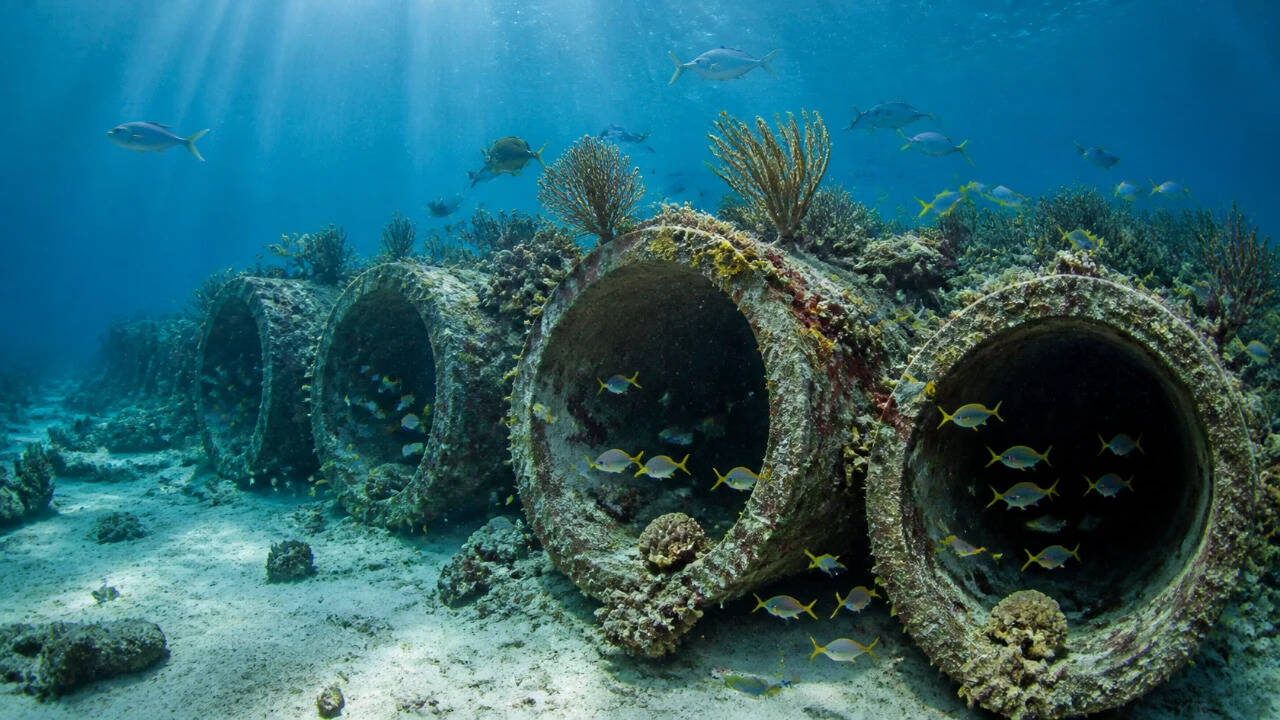
AI representation of marine life taking over discarded concrete pipes
The concrete structures were loaded onto a barge using a forklift and transported to the offshore site, where they were carefully lowered to the seabed. The project was developed with support from Think It, Sink It, Reef It, an organisation involved in artificial reef initiatives that aim to create marine habitats using suitable recycled materials.The idea behind the installation is relatively simple, as much of the ocean floor off Northeast Florida consists of sand, which provides fewer hard surfaces for certain marine organisms to attach themselves to and fewer natural hiding places for fishes. By introducing these concrete structures with different shapes, openings and surfaces, the project creates spaces that marine life can gradually occupy and make home to.The openings in pipes and culverts can provide fish with places to shelter from predators, while the outer surfaces may attract algae, barnacles, corals and other organisms over time. As these organisms establish themselves, they can become part of a wider food web, potentially attracting smaller fish and other marine organisms that may eventually draw larger predatory species to the area. Creating a whole ecosystem around them.
Why artificial reefs matter for marine life
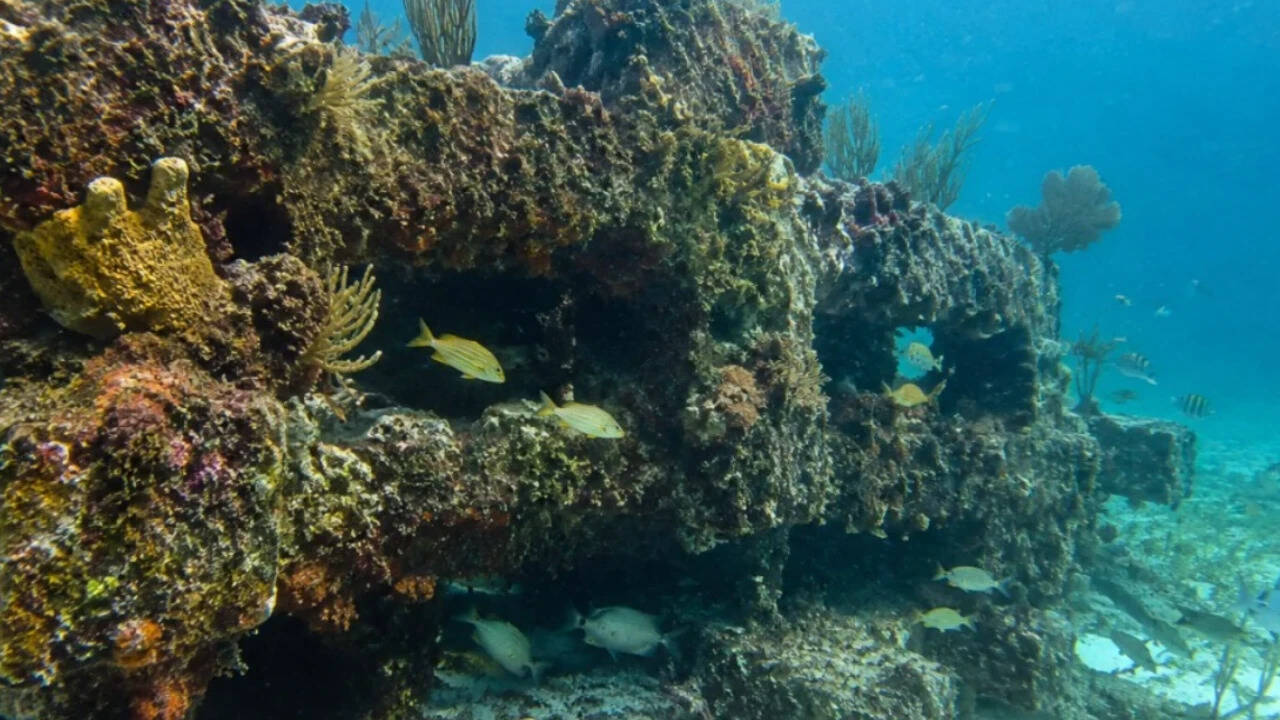
An AI generated representation of an artificial reef structure covered with marine growth shows how underwater habitats can develop around human-made structures (Representative image | Image credit: ChatGPT)
Artificial reefs, once a waste, are working wonders for Florida marine life and can provide shelter, feeding opportunities and potential spawning areas for fish and other marine organisms, particularly in locations where natural hard-bottom habitats are limited. Their surfaces offer attachment points for organisms that cannot easily establish themselves on loose sand, while the gaps and openings between structures create spaces where different species can live and feed.However, an artificial reef does not become a thriving marine ecosystem immediately after it reaches the seabed, and its long-term ecological value also depends on several factors, including water conditions, the composition of the materials and the species that eventually colonise the site. The presence of concrete alone does not guarantee an increase in fish populations, but appropriately designed and placed structures can provide useful habitat in suitable locations.For Jacksonville, the installation also represents a renewed effort to develop offshore reef habitats, with local reporting describing it as the city’s first major artificial reef installation of this kind in several years. If marine organisms establish themselves successfully, the site could become another location where the region’s underwater biodiversity can develop.
A community effort to give construction materials a second life
The project began taking shape in early 2025, when the Jacksonville Offshore Sport Fishing Club and its partners explored the possibility of using donated concrete to create an offshore reef. The initiative subsequently involved grant applications, coordination with government agencies and contributions from private companies that supplied materials or helped with the work required to transport and sink the structures.The effort received support from organisations including the Jacksonville Waterways Commission, the Florida Fish and Wildlife Conservation Commission and the US Fish and Wildlife Service, alongside other partners. Bringing together fishing enthusiasts, conservation groups and businesses allowed materials that might otherwise have been discarded to be put to a new use, provided they were suitable for placement in the marine environment.Apart from its potential ecological benefits, the reef could eventually offer additional opportunities for recreational fishing and diving, although these activities will depend on how the site develops and the conditions surrounding it. Organisers also hope that the installation will contribute to a longer-term programme of offshore reef development in Northeast Florida.
Jacksonville has a history of building artificial reefs
The latest installation builds on earlier reef-building efforts in the region, including a project carried out in 2000 and 2001, when volunteers and students from Mandarin High School helped create 500 dome-shaped concrete structures known as Reef Balls. These structures were placed offshore to establish the Charles H. Kirbo Memorial Reef between Jacksonville and St. Augustine.The new project follows a similar principle but uses surplus construction materials, including pipes and culverts, to create additional hard surfaces and sheltered spaces on the ocean floor. It also illustrates how materials that have outlived their original purpose can sometimes be repurposed for environmental projects rather than simply being sent for disposal.For now, the concrete structures mark the beginning of a gradual ecological process rather than a completed underwater ecosystem. As marine organisms begin to settle on the surfaces and fish explore the newly created spaces, researchers and project partners will have to observe how the site develops to understand the reef’s actual contribution to the surrounding marine environment. For we know “one person’s trash is another person’s treasure.” And that’s how the construction worker became waste found a new calling, trading its life on land for a second chance at becoming a home for marine life.