


A dispute over a Mississippi man’s estate has ended with the Court of Appeals upholding a will signed more than two decades earlier. The case, In the Matter of the Estate of Lamar DeLoach, decided on 10 November 2026, turned on whether a later document had validly revoked the 2003 will, and whether the brother who claimed the estate had enough evidence to prove his version of events, as per the report on Justia U.S. Law.Lamar DeLoach signed a last will and testament on 18 July 2003 and died on 23 January 2023. His cousins, Larry and Rodney DeLoach, filed to probate that will shortly after his death, while his brother, Frank DeLoach, argued that Lamar had later made and then destroyed a newer will. Read more details about it, as per the court report, here:
The 2003 will and its terms
The 2003 will was prepared by attorney Phil Embry, who signed the document as a witness along with his secretary, Teena Newton. It named Larry and Rodney as co-executors and left $100,000 to Garner Jo Myers.The remainder of Lamar’s property was left to Larry and Rodney, his cousins. That arrangement became the foundation of the estate plan that the court ultimately upheld.On 28 February 2023, Larry and Rodney filed a petition to probate the 2003 will. The chancery court admitted it to probate on 13 March 2023 and appointed the two cousins as co-executors of the estate.
Frank’s claim about a later will
Frank DeLoach argued that Lamar had executed a later will in 2012 that expressly revoked the 2003 document. He claimed that Lamar later destroyed the 2012 will, which would mean Lamar died without a valid will.If that argument had succeeded, Frank said the entire estate would have passed to him as Lamar’s sole heir. That would have displaced the cousins and the $100,000 gift to Garner Jo Myers.Frank filed a will contest and a motion for injunctive relief on 1 June 2023. He argued that the 2012 instrument had revoked the 2003 will and that its later destruction left the estate to be divided under intestacy rules.
What the witnesses said
Frank relied on statements from Audrea and Joe to support his account. Joe said he advised Lamar to burn the 2012 will so it could not be pieced back together.Joe assumed that Lamar had burned the document after their discussion, but he did not actually witness the destruction. That gap became important, because the court needed proof that the later will had been validly executed in the first place.The chancellor found that the affidavits from Audrea and Joe did not meet the legal standard required under Mississippi law. Without that proof, the claim that the 2012 will had ever been validly made could not stand.

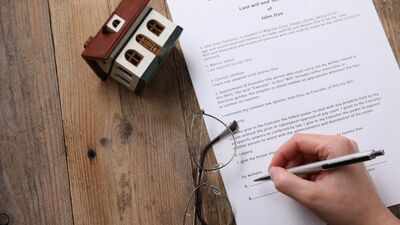
Representative imafe from Canva
Why the later will failed
The central problem was that Frank could not produce a validly executed 2012 will. The only document that met the requirements of Mississippi Code Annotated section 91-5-3 was the 2003 will itself.The court explained that if a later will containing a revocation clause was not validly made and executed, that revocation clause has no effect. In such a case, the earlier will remains the governing document.The chancellor granted summary judgment in favour of Larry and Rodney on 22 March 2024. He ruled that Frank had failed to show that the 2012 instrument was legally viable, which made the question of whether it revoked the 2003 will moot.
The appeals court’s decision
Frank appealed, arguing that the chancellor had erred in granting summary judgment and that the ruling was wrong on the facts. The Court of Appeals reviewed the case and found no error.The court agreed that Frank had failed to produce a valid subsequent will that revoked the 2003 document. It also agreed that the issue of whether the 2012 will was later destroyed was irrelevant, since the document had never been properly executed in the first place.The Court of Appeals affirmed the chancery court’s decision in full. The 2003 will remains the last valid will and testament of Lamar DeLoach.
What this means for the estate
The practical effect is that the estate will be distributed according to the 2003 will. Larry and Rodney, as co-executors, will carry out the terms of that document.Garner Jo Myers will receive the $100,000 gift, and the remainder of the property will go to the cousins. Frank’s claim that he should inherit the entire estate has been rejected.The case highlights the need to follow the proper legal process when making or revoking a will. A document that is not properly executed cannot be used to change an earlier valid will, even if there are claims that it was later destroyed.
An lesson in estate planning
The case is a reminder to families dealing with estates that verbal assurances, and informal agreements, don’t cut it. Wills must meet specific legal requirements to be valid, and those requirements do not disappear simply because someone says a document was burned.The ruling of the Court of Appeals makes it clear that the burden of proof is on the party challenging an existing will. Without solid evidence that a later will was properly made, the earlier document controls.For Frank DeLoach, the outcome means the estate will not pass to him as Lamar’s sole heir. For Larry and Rodney, it confirms their role as executors and beneficiaries under the 2003 will.