


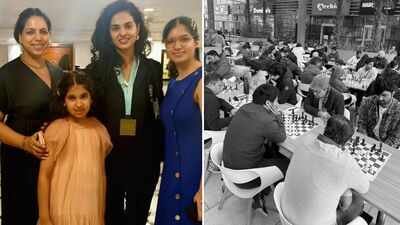
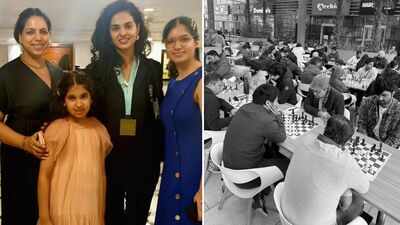
NEW DELHI: Have you ever visited a chess tournament? There is a certain kind of silence that persists outside a tournament hall. It belongs to the parents. Behind the doors, children are hunched over boards in a hush so complete you can hear clocks being slapped. Outside, in the corridor, adults sit with water bottles and phones they are not really looking at, waiting for a result that will arrive as a small face in a doorway, either lit or collapsed.Most people spend those hours waiting. Nidhi Bhasin Rohilla was once one among them before she finally huffed, “This is not my cup of tea.”Today, the enterprise she has built from the hours of pondering in those noiseless corridors runs events across eight states, more than 40 a month, with about 16 paid staff and roughly 100 volunteers.Nevertheless, it all began with a corporate salesperson who had to choose between her career and her daughter’s.
The choice
Shivika Rohilla, Nidhi’s elder daughter, started playing chess in September 2013, aged six and a half. By April next year, she was second at the Delhi State Championship in her age group.“We realised that she had achieved this in less than six months of playing chess. That was when we decided to focus more seriously on chess,” Nidhi told TimesofIndia.com during an exclusive interaction.Nidhi, a dentist by degree, had built a sales career at different top-tier corporate institutions. Her husband, a surgeon, worked at AIIMS Delhi.In 2012-13, Delhi, by her count, had “perhaps only three or four good” chess coaches.“We wanted to ensure that Shivika received the right coaching, even if that meant taking her outside Delhi,” Shivika’s mother shared.
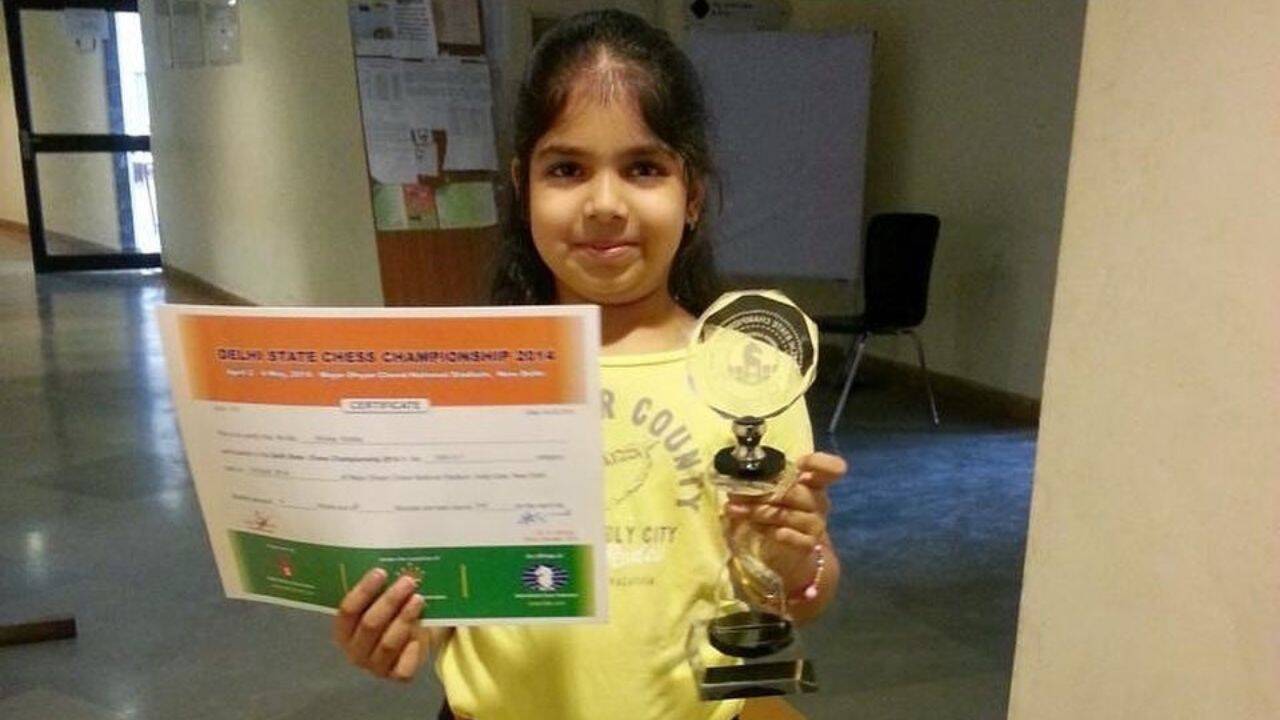
Shivika Rohilla’s first tournament in Delhi U8 State Championship (Special Arrangements)
With both parents busy earning the fund needed to fuel Shivika’s budding chess career, there was little time for them to travel with her to tournaments.“As she started performing well, people recommended that if we wanted her to achieve the required norms and titles, we would need to take her abroad since India did not have enough tournaments of the level required for players pursuing Grandmaster titles,” she added. “Initially, I sent my mother with Shivika to participate in these tournaments.”The turning point came when Shivika was about 12 and hit a bad stretch. “She was unhappy with her performance and started losing games,” Nidhi continued. “Part of the problem was that travelling to South India for coaching regularly was not financially or practically feasible for us. We were managing with the coaching available in Delhi.”The coaching was there, but the environment was not. Her school, St. Mary’s, had little chess culture, and her friends had mostly quit.Nidhi recalled, “Eventually, she started questioning whether she should continue playing chess. She would ask, ‘Why should I continue? What opportunities are there in chess?“At that time, I had to choose between my career and Shivika’s chess career. Obviously, when a child has to travel for tournaments, one parent needs to accompany them. That was when I decided I needed to step back from my own career and give her the support she required.”
The pondering
Just before the COVID pandemic, Nidhi, who was earning around Rs 50 lakh per annum at that time, left her job for good. “I realised that Shivika needed to travel more frequently. Her rating had reached nearly 2,000, and the next step was to work towards achieving the norms and titles she was pursuing,” she recalled.“We were spending a tremendous amount of money. We had no external financial support, and everything had to be managed by my husband and me. Our savings were being depleted. Almost everything we earned was going towards chess.”The family was getting closer and closer to calling it an end. But a final shot was awaiting as they took Shivika to a top tournament in Brazil, treating it as a verdict.“If she performed well and we felt she had a real chance of progressing, we would continue supporting her. Otherwise, we would reconsider our decision,” she revealed.
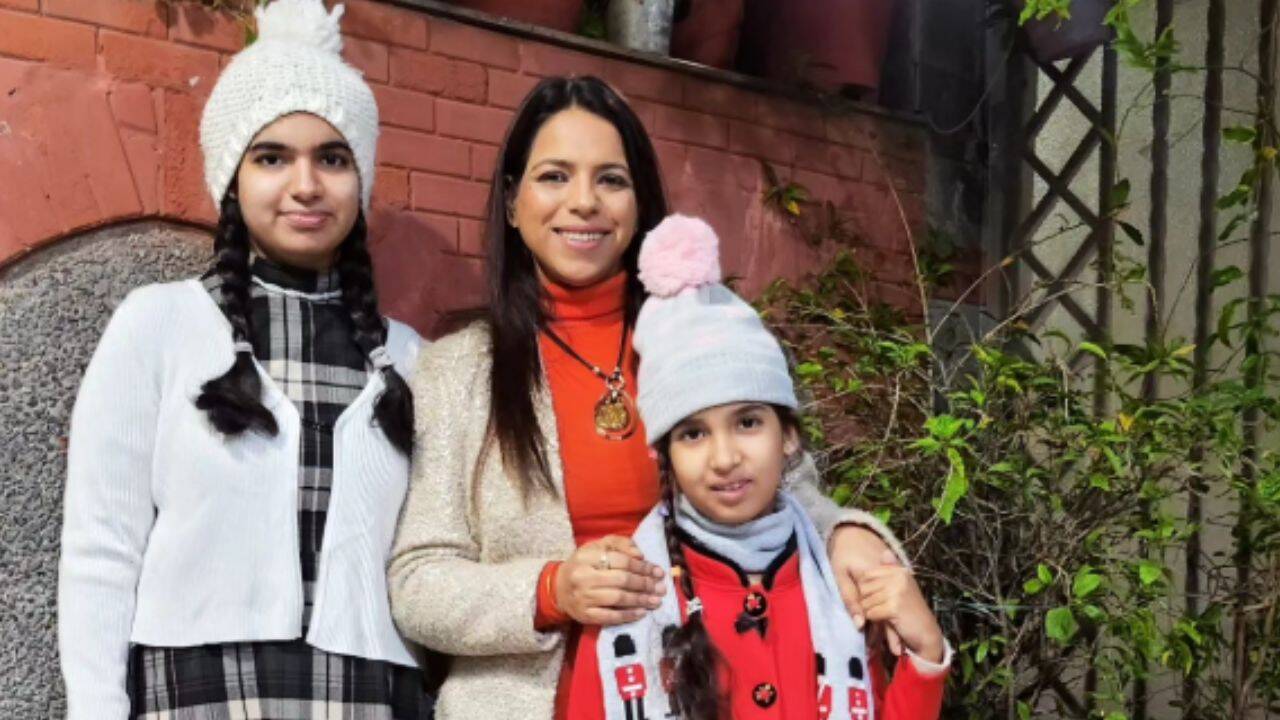
L-R: Shivika Rohilla, her mother Nidhi, and younger sister Rishika (Special Arrangements)
Shivika was among the top five in her category. “Her games went well, and people were appreciating her performance,” Nidhi said. It was not a full stop after all.Eventually, Shivika’s father left salaried work and opened his own hospital.“A regular salary is often insufficient to support a serious chess career unless the family has substantial financial resources,” Nidhi said. “Some coaches charge Rs 4,000-5,000 per hour.”
The gap
Then came the problem that created the growing chess ecosystem. During Shivika’s year off after Class 12, the family paid practice partners Rs 2,000-3,000 an hour.“To prepare for games against International Masters and Grandmasters, she needed strong practice opponents who could push her to improve,” Nidhi recalled.But, Shivika would mostly beat these practice partners, raising eyebrows of those around her. Therefore, her family felt she was not gaining as much from the sessions as they had hoped.Delhi didn’t have enough top-quality players in one place. So Nidhi built one.“We wanted to create opportunities for players to meet in cafés and play meaningful practice games,” she revealed. There came the Chess Coffee Connect initiative by SR Chess Academy.The idea behind the academy, SRCA, grew from the coaches already working with Shivika. “Since I was already paying for Shivika’s coaching, we could use the same arrangement to help other children learn,” Nidhi explained.It started with two or three children. Today it has nearly 80.
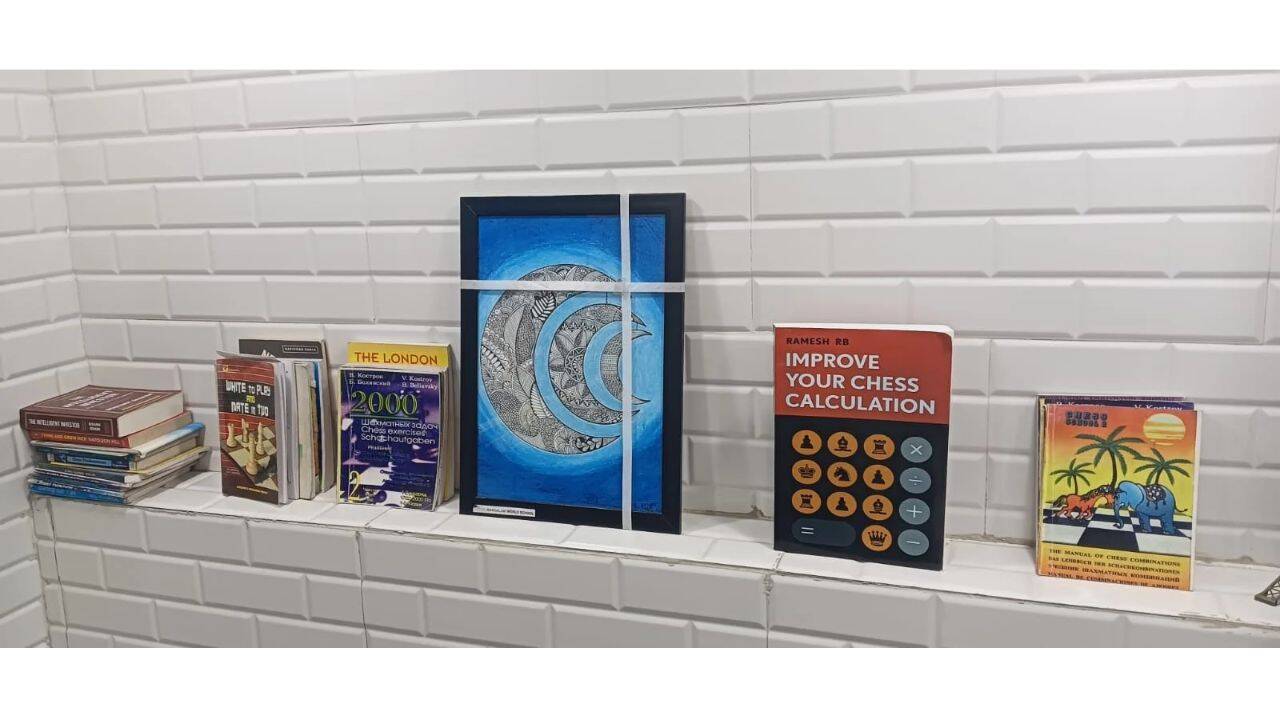
Shivika’s books are used as resources in classes (Special Arrangements)
“We did not have a website or a formal setup at the beginning. We had a space, a coach, chess books, and Shivika’s equipment,” Nidhi recalled with a smile.Chess Coffee Connect, the café-based circuit, followed as the answer to the same loneliness that nearly pushed Shivika out of the game.South India, Nidhi feels, has the advantage of community, where players travel together and “analyse their mistakes immediately after playing.”Delhi did not have it. “We need to develop a culture in which people continue playing chess and support one another,” she added.Now, hundreds of players/chess enthusiasts meet at a particular place almost every week to play games, share ideas, and build a community the north was lacking.
Listening as strategy
Her explanation of the growth that her ventures have seen has little to do with marketing, despite a career spent in it.“I work from the heart and maintain a strong connection with the players,” she revealed. “Our principle is simple. We listen to what people need and try to provide it.”The results read like a list of complaints turned into products. Parents wanted a 25+5 time control for practice before rated events, so she created one. Senior citizens couldn’t afford weekly entries, so there is a discount. Mothers said their daughters weren’t getting support from their fathers to play, so those girls play free.
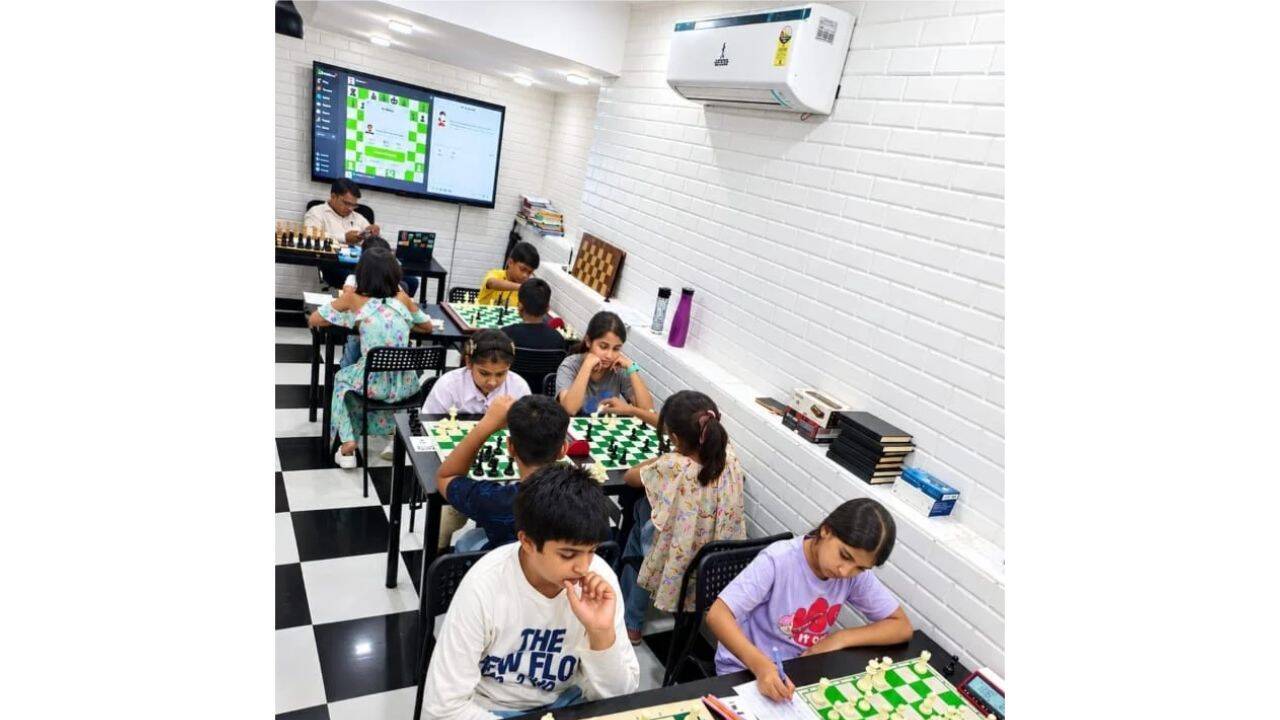
Students take classes at SRCA (Special Arrangements)
Through the Helping Hands NGO, some children get free books and classes. Nidhi, however, feels that keeping them in the game is hard: “It can be difficult for them to justify continuing to invest their limited resources.”The portfolio has since spread. There are chess-learning cards, including a Grandmaster series she says is trademarked.There is a sports-psychology arm, Mind to Moves, which runs sessions for parents on rating anxiety before major tournaments.There is a Chess Moms Club, born from watching parents guard information about coaches and events.
What Delhi was missing
Some of the most telling work isn’t aimed at prodigies.“We now have senior citizens who come to Chess Coffee Connect and tell us that they played chess in school but have not had an opportunity to play regularly for years,” she said, overjoyed. “When they return to the game, it makes everything worthwhile.”
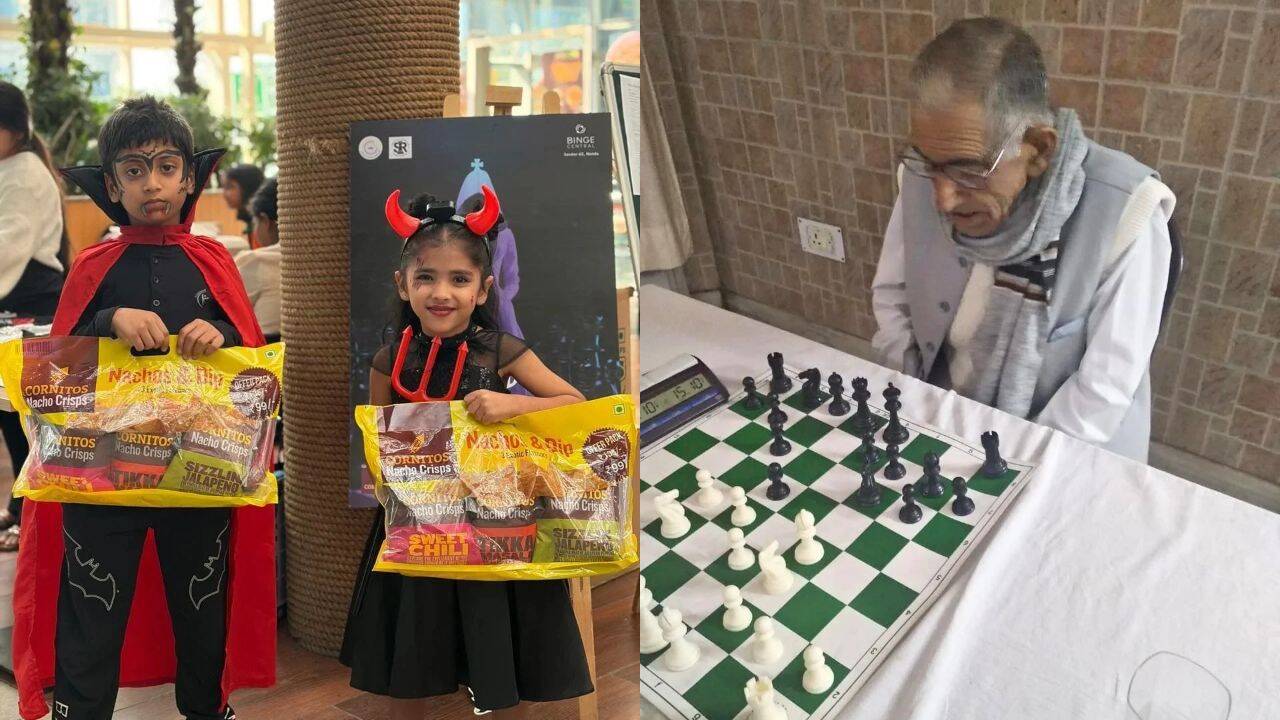
From young to old, SRCA has made the game fun for all (Special Arrangements)
Besides various theme-based events, the organisation has also hosted a game between a visually impaired player and a sighted one.“Chess is a game. It is not only about tournaments, ratings, or winning titles. If a child plays because they genuinely love chess, they may continue enjoying it throughout their lives,” she noted.
The unfinished part
For all the scale, the finances remain stubbornly homemade.“Sponsorship is our biggest challenge,” she revealed. “We currently have no sponsors, and everything is self-funded.”Chess.com’s yearly free memberships were the only notable outside help. Federations have been supportive, she feels. But the bigger issue is cost, as she added, “Venues do not provide their facilities for free.”“My knowledge of sales, marketing, negotiation, and working with organisations has helped me approach schools and other institutions.” But she says she hasn’t had to push hard, as invitations came through the front door.Meanwhile, Shivika, now a Woman International Master (WIM), is studying aerospace engineering in London, a five-year course she settled on in Class 7 or 8, and she hasn’t stopped playing. She recently won a tournament there.The family has taken the model with her. Chess Coffee Connect has run eight ECF-rated events in England.Asked whether she is satisfied with the work she has managed to do for chess, Nidhi doesn’t pretend to be finished. “I could not be happier with what we have accomplished. However, I know there is always more we can do.”