


The Atacama Desert is a landscape where water is measured in millimetres, not rivers. Today, parts of this vast Chilean desert receive almost no rain, making the discovery of an animal that depended on plentiful freshwater all the more surprising. Buried in an ancient deposit, a single tooth has now offered scientists another glimpse of a very different Atacama, one with wetlands, vegetation and enough water to support a large, semi-aquatic rodent.According to a report by Live Science, researchers identified the roughly 9-million-year-old tooth as belonging to an extinct relative of today’s capybaras, adding to growing evidence that the Atacama was not continuously hyperarid throughout its long geological history.
A surprising fossil in the desert
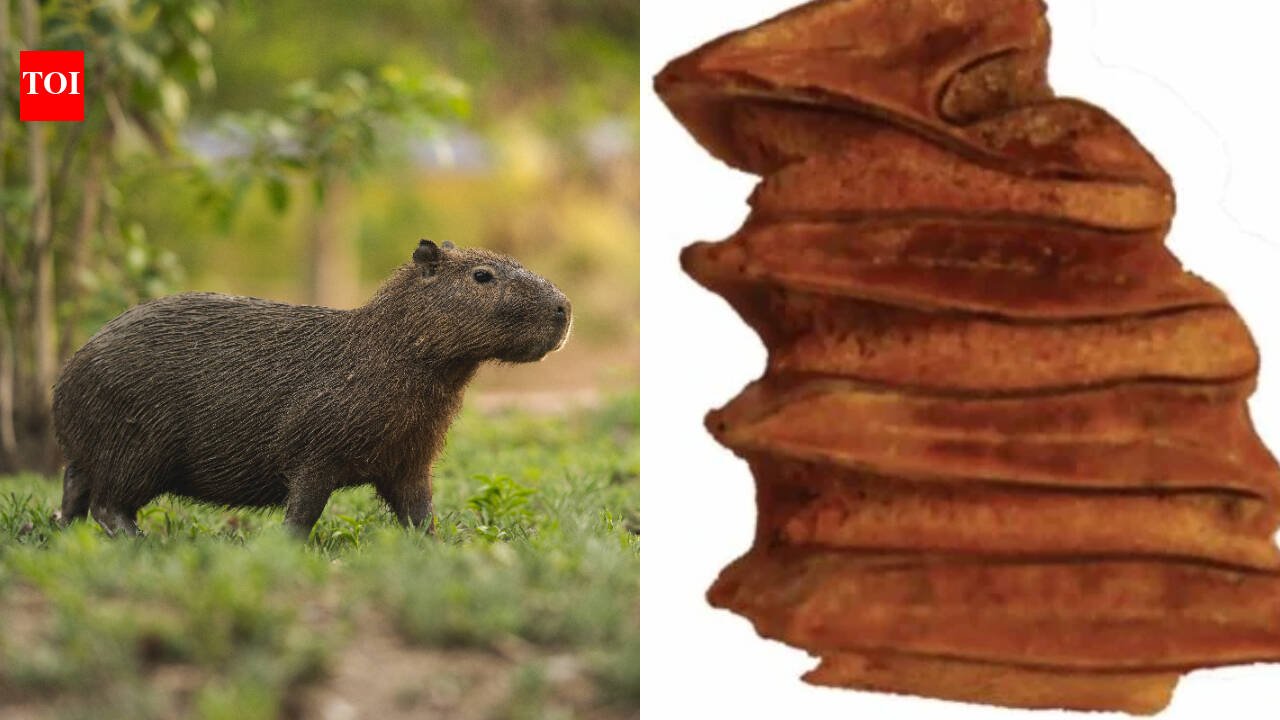
The Atacama occupies northern Chile and is considered one of the oldest and driest deserts on Earth. Its hyperarid core receives less than 2 millimetres of rainfall per month in some areas. The region’s extreme dryness is partly linked to its geography. The Chilean Coast Range blocks moisture arriving from the Pacific, while the Andes restrict moisture from the Atlantic. However, geological research suggests that the desert’s aridity began taking shape millions of years before the Andes reached their present heights, adds the online report by Live Science.The newly discovered tooth provides another reason to reconsider how the region looked in the distant past, the report claims.As per Live Science, the fossil belonged to a large capybara relative identified as Hydrochoerus and Cardiatherium, which lived during the late Miocene. Modern capybaras are the world’s largest rodents and depend heavily on stable freshwater environments. They feed on vegetation that also requires sufficient water to grow. Finding one in today’s Atacama therefore points towards an environment dramatically different from the barren landscape visible now.
Evidence of an ancient wetland
The tooth was discovered in a geological layer containing evidence of a shallow marine environment that existed between about 7 million and 10 million years ago, claims the report. It was not an isolated clue. Researchers have also found microscopic plant remains known as phytoliths, indicating that palms, grasses, gingers and other flowering plants once grew in the region. Together, these discoveries paint a picture of a landscape that periodically supported far more water and vegetation than the Atacama does today.Other fossil evidence from the region has pointed to freshwater fish and crocodiles, strengthening the possibility that wetlands and waterways periodically spread across parts of the desert. The capybara relative adds another piece to that ecological puzzle because its semi-aquatic lifestyle would have required access to dependable water.
How did capybaras get there?
According to Live Science, the discovery also raises a geographical mystery. The Andes presented a formidable barrier between the animal’s likely habitats farther east and the fossil site in northern Chile, with elevations reaching around 5,500 metres. Researchers suggest the animals may have travelled instead along South America’s western coast, moving between wetlands, rivers and other freshwater habitats. The tooth itself also makes long-distance transport an unlikely explanation. Its size makes it difficult to imagine being carried hundreds of kilometres by wind, while a waterway capable of transporting such material would itself point towards a wetter environment.
A changing picture of the Atacama
The fossil does not mean the entire Atacama was once a lush landscape. Rather, it strengthens the case that the region experienced periods of significantly wetter conditions during the late Miocene. For a desert famous for its extreme dryness, the tiny fossil offers a surprisingly big lesson: landscapes that appear permanently hostile today can have remarkably different histories. The capybara tooth is another fragment of that history, revealing a time when water-loving mammals could survive in a place that now seems almost entirely defined by its absence.Images Courtesy: istock and Science Alert