

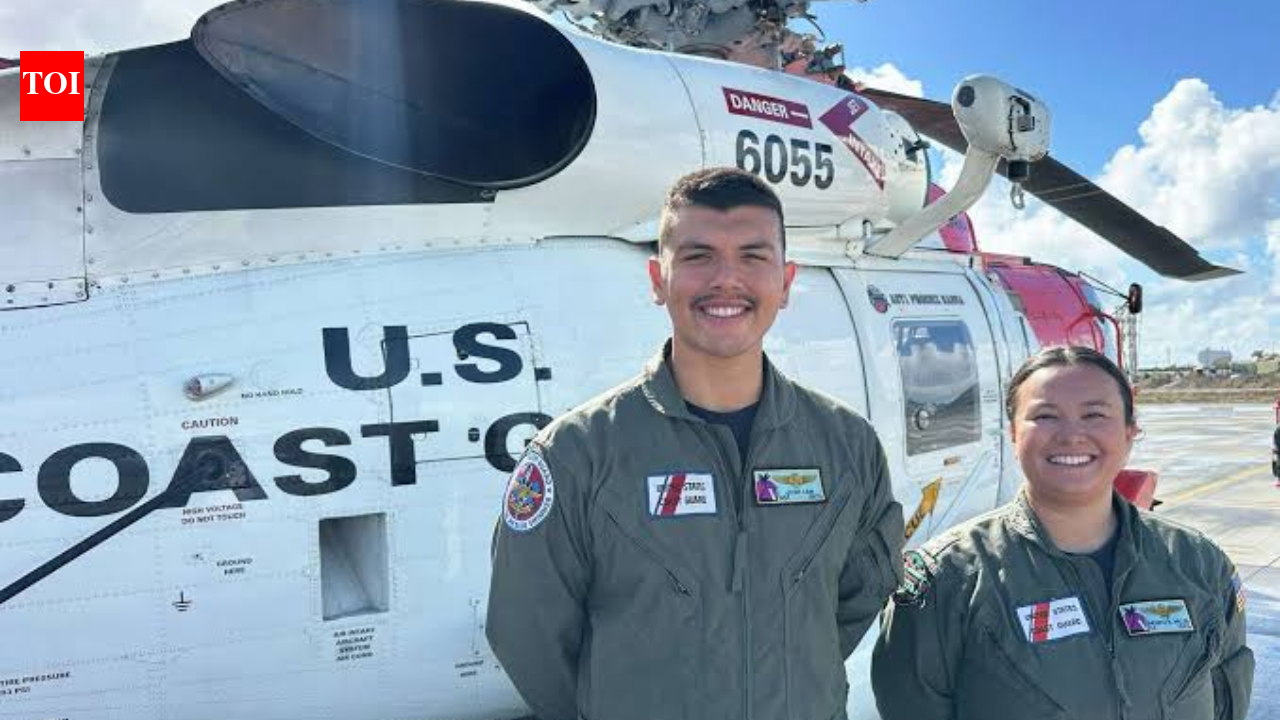
A 24-year-old US Coast Guard rescue swimmer spent two hours battling rough seas in near-total darkness to save 16 people after a boat capsized in the Pacific Ocean off Mexico’s Baja California peninsula. Eleven others remain missing after an extensive search was called off.Josh Law was lowered from a Coast Guard helicopter into the ocean during the early hours of October 16, with waves reaching 6 to 8 feet (1.8 to 2.4 metres). Guided by a searchlight from the aircraft, he searched the water for survivors scattered across the area.“I was experiencing exhaustion at that point,” Law told The Associated Press in his first interview since the operation. “We had very little sleep. But what I was experiencing was nothing compared to what they were at that point … I just had to keep that in mind.”The rescue unfolded about 140 miles (225 kilometres) off Mexico’s coast. Law was the only rescuer in the water during the operation, pulling survivors towards a basket lowered from the helicopter. The crew hoisted each person aboard before lowering the basket again.The Coast Guard suspended its search for the remaining 11 people late on Sunday after teams from the United States and Mexico, alongside the US Navy, searched more than 2,441 square miles (6,322 square kilometres) over a combined 89 hours.
Mayday call triggers overnight rescue
The emergency began at around 1 am, when a distress call reported that a boat was sinking in the Pacific off Ensenada, Mexico. Within minutes, an alarm woke Law and other crew members at US Coast Guard Air Station Ventura, northwest of Los Angeles.Helicopter pilot Lieutenant Miyako Miller checked the flying conditions and planned a route over the ocean. Law prepared his dry suit, fins and medical supplies before securing himself in a harness designed to lower him from the aircraft.The crew took off from Ventura at about 2am. Miller used night-vision goggles to navigate without moonlight, relying on the stars to maintain her bearings.As the helicopter neared the reported location, she spotted a faint light in the distance. The crew then saw what appeared to be debris floating on the surface, although the darkness made it difficult to identify.Miller manoeuvred the aircraft until it hovered about 40 feet (12 metres) above the water while the flight mechanic guided her positioning.“I’m doing my best to maintain my references externally by looking outside through the night vision goggles,” Miller said, describing how she relied on visual cues while the mechanic directed the helicopter.
Swimmer pulled survivors from rough seas
Law entered the water as the helicopter’s rotor blades churned up spray and turbulence. The noise made it difficult to hear, while the darkness limited what he could see beyond the crew’s searchlight.The people in the water were spread across a wide area. Some wore life jackets with small lights, while others held on to one another, buoys or pieces of wreckage as they tried to stay afloat.Law said he swam towards each survivor, turned them onto their backs and used a rescue method known as a “buddy tow”, placing an arm over the person while kicking towards the helicopter’s pickup point.“With one hand, I’m holding the survivor. With the other, I am signalling to the helicopter and working with the device,” he said.At the designated point, Law signalled for the flight mechanic to lower a rescue basket. He placed each survivor inside before the crew raised the basket into the aircraft. The process was repeated until 16 people had been rescued.As the operation continued, water gradually filled Law’s dry suit to his knees, adding weight as he repeatedly swam through the waves.The helicopter crew faced a separate constraint as fuel supplies dwindled and the aircraft filled with survivors. They decided to fly to a Coast Guard station in San Diego, where ambulances were waiting.During the flight, Law treated three people with serious wounds and worked to stop their bleeding. The Coast Guard said some injuries were consistent with shark bites and that its personnel provided emergency first aid.
Investigation continues into cause of disaster
The rescued people were all Mexican nationals, according to the Mexican consulate. The circumstances surrounding the boat’s voyage remain under investigation, including where it departed from and why it was so far offshore.The Coast Guard said US Customs and Border Protection was investigating the incident and interviewing survivors. The agency did not respond to multiple requests for information on whether the boat was involved in migrant smuggling.Officials have not established whether the vessel became lost, suffered engine failure, was swept out to sea or was intended to travel that distance. Only pieces of the boat were recovered.After the survivors received medical treatment, Customs and Border Protection officers said they would be processed under US immigration law. US officials said nearly half of those rescued had since been returned to Mexico.Law and the rest of the crew returned to Ventura on the morning of October 16. He described it as the longest rescue operation he had undertaken.The search for the missing people continued for another two days before being suspended without finding the remaining 11.The incident occurred along a remote stretch of the Pacific used by boats travelling from Mexico’s Baja California peninsula. Migrants increasingly turn to dangerous sea routes offered by smugglers to avoid heavily guarded land borders. Small vessels known as pangas sometimes depart Baja at night and travel hundreds of miles north.