


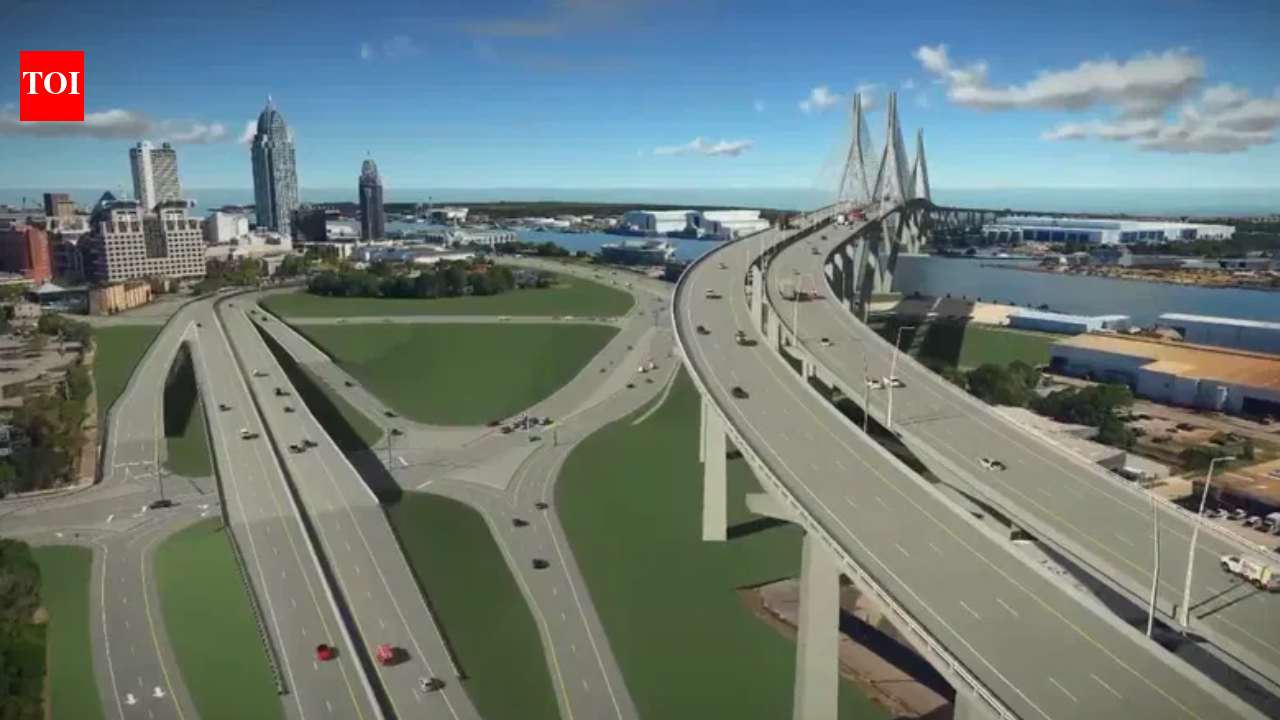
A $2.52 billion federal loan has been approved to build the Interstate 10 Mobile River Bridge and Bayway project, clearing the way for the largest infrastructure project in Alabama’s history. US Transportation Secretary Sean P. Duffy announced the approval of the low-interest loan, which provides key funding for the $4.15 billion project aimed at fixing a decades-old traffic bottleneck along the Gulf Coast. The massive construction project will replace aging roads, widen Interstate 10, and build a high-clearance cable-stayed bridge over the Mobile River. Beyond easing traffic for interstate commuters and freight trucks, the new bridge will reroute hazardous materials away from the George Wallace Tunnel under the Mobile River, solving long-standing safety and environmental concerns in downtown Mobile.
Breaking a decades-old Gulf Coast bottleneck
Interstate 10 is a key freight route connecting the East and West coasts of the United States. In southern Alabama, the highway narrows to two lanes in each direction through the George Wallace Tunnel, causing daily traffic jams that stretch for miles during busy travel hours and holidays. According to technical figures published by the Alabama Department of Transportation (ALDOT), the current infrastructure was built in the 1970s to handle around 35,000 vehicles a day. Today, traffic often tops 80,000 vehicles daily, far beyond what it was built for. The new cable-stayed bridge will offer six lanes across the Mobile River with a vertical clearance of more than 215 feet, allowing large container ships and oil tankers to pass freely to and from the Port of Mobile. Along with the river crossing, the project includes replacing and widening the existing low-lying Bayway bridges across Mobile Bay, building a raised structure above 100-year storm surge levels.
Rerouting hazardous materials away from urban centers
Federal safety rules currently ban vehicles carrying hazardous, flammable, or toxic materials from entering the Wallace Tunnel beneath the Mobile River. Because of this, chemical tankers and hazmat trucks must detour through downtown Mobile streets and residential neighborhoods before crossing the river via the Bankhead Tunnel or the Cochrane-Africatown USA Bridge. Official project details released by ALDOT confirm that the new Mobile River Bridge will offer a direct, designated route across the river for commercial hazmat traffic. Moving heavy hazardous cargo onto the elevated interstate bypass takes dangerous materials off local streets, lowering safety risks for downtown residents and historic business districts.
Funding structure and federal support
The financing secured through the US Department of Transportation operates under the Transportation Infrastructure Finance and Innovation Act (TIFIA), which offers flexible repayment terms backed by future toll revenue. In an official statement released by the US Department of Transportation, Transportation Secretary Sean P. Duffy spoke about the strategic value of the federal backing. “President Trump vowed to get Alabama the infrastructure it deserves, and since assuming office, my department has worked diligently over the last 100 days to make it happen,” Duffy said. “Now that the I-10 grant agreement is a done deal, the state can get shovels in the ground and start moving dirt.” The federal loan adds to a previously awarded $550 million federal grant from the Federal Highway Administration’s Bridge Investment Program, along with state infrastructure bonds.
Toll rates and commuter protections
To repay the construction costs, the new bridge and Bayway system will operate as a toll road once construction is finished. Official financing documents published by the Alabama Department of Transportation outline a tiered toll system built around the state’s ALGOpass electronic transponder system. Local commuters will have access to an unlimited monthly pass capped at $60, which state officials have locked against annual toll increases for the first ten years of operation. Individual passenger vehicle trips using the ALGOpass will start at $3.00, while vehicles using out-of-state transponders will pay $7.70 per crossing. Drivers using unregistered pay-by-plate billing will face a $15.40 charge per trip. ALDOT confirmed that existing non-interstate options, including the Causeway, the Bankhead Tunnel, and the Wallace Tunnel, will remain toll-free for local drivers looking for non-express routes. Construction management is led by the joint venture team Kiewit Massman Traylor. Main bridge construction is set to begin after final ground preparation, with full traffic opening currently expected in 2031.